
Telehealth therapy · Anywhere in Florida
Disability and Chronic Illness
Disability is not automatically a tragedy. The systems around it can still be exhausting.
- Florida LCSW, license SW27230
- Secure video sessions
- In network with Aetna, Cigna, Medicare, and more
Lived experience
Life, plus logistics
I grew up with cerebral palsy.
That doesn’t mean I know what your disability is like from the inside.
It does mean you likely won’t spend our first twenty minutes convincing me that the broken elevator or the missing ramp is a real problem.
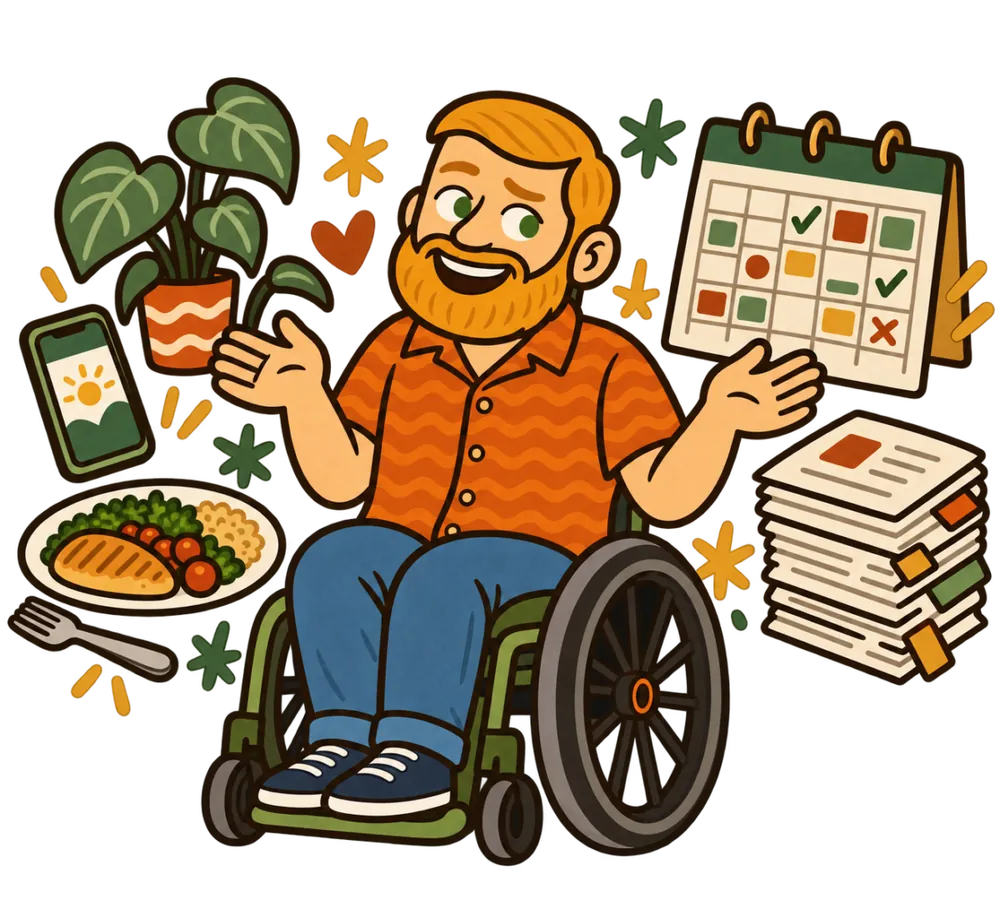
Life with a disability or chronic illness tends to be a strange mix of regular life and absurd logistics.
You have the same things on your plate as everyone else, like work stress, dating, grief, family, money, anxiety, and the nightly question of what to make for dinner.
On top of that, you might be juggling rides, insurance, doctors, equipment repairs, pain, fatigue, benefits paperwork, caregivers, and whether the restaurant your friends picked has a bathroom you can actually get into.
You’re carrying both.
My approach
Therapy without assuming your body is the problem
Disability-affirming therapy means we don’t treat your disability as something you have to emotionally “overcome.”
Sometimes disability causes genuine loss, pain, limitation, grief, or fear.
We can talk about that without pretending those experiences are inspirational.
We can talk about discrimination, buildings that weren’t designed with you in mind, relying on rides and services that don’t show up, strangers who assume things, and the mountain of forms, calls, and appeals disability can generate.
No silver-lining speeches from me.
We focus on making the life you actually have work better for you.
Independence is not all or nothing
Disabled people get handed a strange version of independence, where success means never needing anybody. Better questions look like these.
That is not how human beings work.
A more useful question may be:
- Where do you want more control over your day?
- Where would a hand make life easier?
- What kind of help feels like help, and what feels like hovering?
- Which choices do you want to keep?
Interdependence is how everyone lives.
Healthcare history
Medical systems can leave a mark
Repeated medical treatment can create its own kind of stress.
Therapy cannot make the healthcare system behave.
Years of appointments, waiting rooms, and phone trees add up. Therapy is a place to sort out what all of that has left behind.
Maybe you’ve dealt with
- Doctors not believing you
- Symptoms brushed off as nothing
- Every new problem blamed on the disability you already have
- Procedures that hurt
- Losing your privacy
- Long hospital stays
- Depending on caregivers
- Changes in what you can do
- Dreading the next medical problem
- Fighting insurance denials
- Providers talking to whoever came with you instead of to you
Work, relationships, and identity
Disability can affect relationships in complicated ways.
Partners sometimes become caregivers.
Parents may struggle with allowing autonomy.
Friends may not understand why plans are harder.
Dating can involve deciding when and how to talk about disability.
At work, it might be asking for accommodations, deciding whether to disclose, expectations nobody thought through, or the sense that you have to do twice as much to be seen as equally capable.
We can get into all of it without assuming your disability explains every feeling you have. Sometimes a bad day is just a bad day.
If your health or independence changed recently, the life transitions page may help too. If anxiety or depression is in the mix, we can work on that as well.

Before you book
Common questions
Questions people often ask about this part of my work. The FAQ page covers the rest.
Do I need to identify as disabled?
No.
No. People describe themselves in all kinds of ways, and chronic conditions vary a lot. Use the words that fit you.
Do you only work with people who have physical disabilities?
No.
No. I’ve worked with physical disability, developmental disability, neurodivergence, and chronic health concerns, along with the maze of systems people hit when they try to get support.
Will you understand exactly what I am going through because you are disabled too?
No.
Some shared experience can save you a little explaining. Your life is still yours, though.
I’ll ask about yours instead of assuming it matches mine.
Ready when you are
Booking happens on my scheduling page, and it works the same with insurance or private pay. You can add your insurance while you book. Questions before you commit? Call 754.400.0824 or send me a message. The Insurance page lists the plans I accept.
What it costs: your plan’s copay or coinsurance if I am in network, 20% after the deductible with Original Medicare, or the private pay rate. See costs
For the curious
Want to nerd out on the research?
You don’t have to read any of this before booking. For background on chronic illness, disability, and health, these are reliable places to start.
- Chronic Illness and Mental Health (opens in a new tab)National Institute of Mental Health
- Disability and Health (opens in a new tab)Centers for Disease Control and Prevention
This website is not for emergencies. If you are in crisis, call or text 988, or call 911.