
Telehealth therapy · Anywhere in Florida
Therapy for Anxiety
For when your mind won't stop running
- Florida LCSW, license SW27230
- Secure video sessions
- In network with Aetna, Cigna, Medicare, and more
Start here
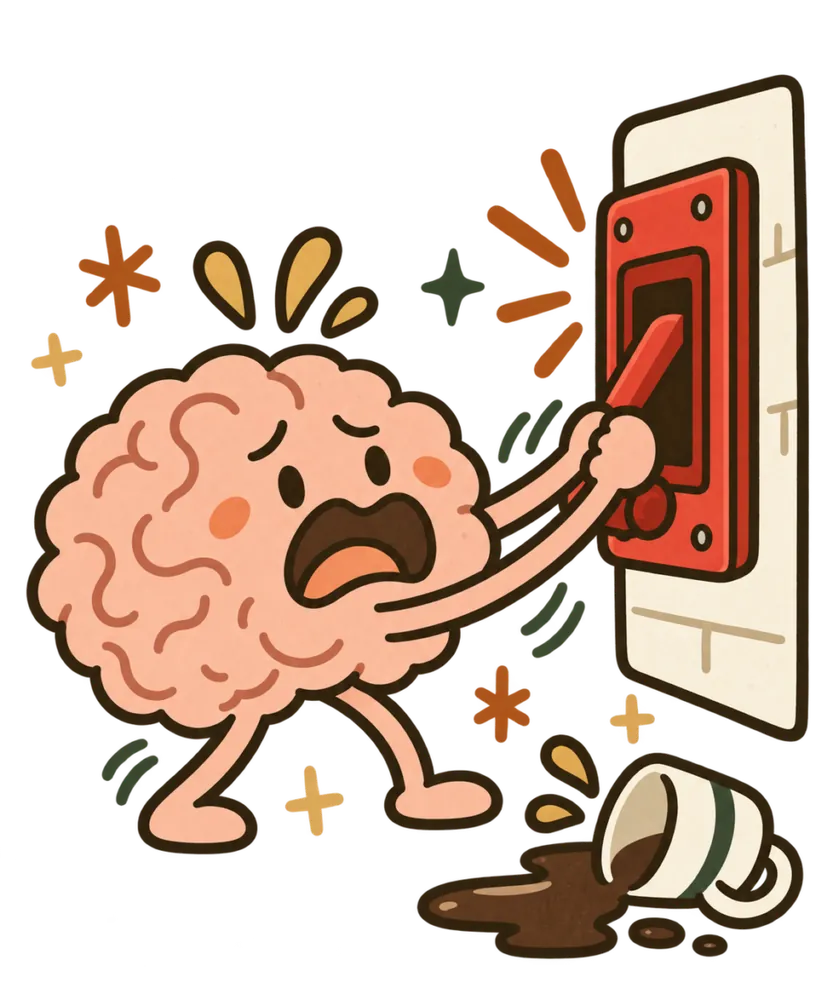
An alarm that goes off for almost everything
Anxiety is a protection system built to keep you out of trouble.
The problem is that it can't always tell a real emergency from an unanswered text.
Anxiety can look like constant worry, tense muscles, panic attacks, racing thoughts, irritability, bad sleep, avoiding things, checking, asking for reassurance, or feeling like you have to plan for every possible outcome before you're allowed to relax.
Maybe you can name the fear exactly, like the flight next month or Thursday's meeting with your boss. Or it might be a low hum that something is off, with no clear cause.
I won't spend our sessions telling you everything is fine, because some things aren't. A lot of the work is sorting out which worries point to a real problem you can act on, and which ones are the alarm going off because the house settled.
How it shows up
How anxiety feels
Anxiety can show up in your body as much as your thoughts. It can be a racing heart before a phone call, a stomach that will not settle, lying awake replaying a conversation, or skipping things you used to enjoy because staying home feels easier. Panic attacks can come out of nowhere and feel like something is seriously wrong.
- What-ifs that run on a loop, especially at night
- Intrusive thoughts, or an urge to check, repeat, or ask if it's okay
- Panic attacks with a pounding heart, short breath, dizziness, or a sense of losing control
- Steering around certain places, people, or tasks
- Can't switch off, even in bed
- Tight shoulders, tension headaches, or a stomach in knots
- A short fuse or a keyed-up feeling
The anxiety loop
How avoidance keeps anxiety going
Anxiety runs on a loop, and a convincing one. It usually goes like this.
- 1
Something sets off the alarm.
- 2
Your mind jumps to the worst version.
- 3
Your body braces like it's already happening.
- 4
So you do whatever makes the feeling stop, which makes sense.
…and next time, it starts right back up.
You might avoid the situation, leave early, check something repeatedly, ask someone for reassurance, search online, replay the conversation for the fiftieth time, or try to make absolutely certain that the bad thing will not happen.
And sometimes that works.
For a few minutes.
Each of those brings relief, and your brain takes notes. It files the escape or the reassurance as the reason nothing bad happened, so the next time the same thing comes up, the alarm goes off a little sooner.
Treatment means breaking that pattern on purpose, without pretending you can ever be completely sure of anything.
Where CBT fits
What CBT looks like for anxiety
Cognitive Behavioral Therapy (CBT) is what I use most with anxiety. Nobody spends the hour arguing with you about whether your thoughts are irrational.
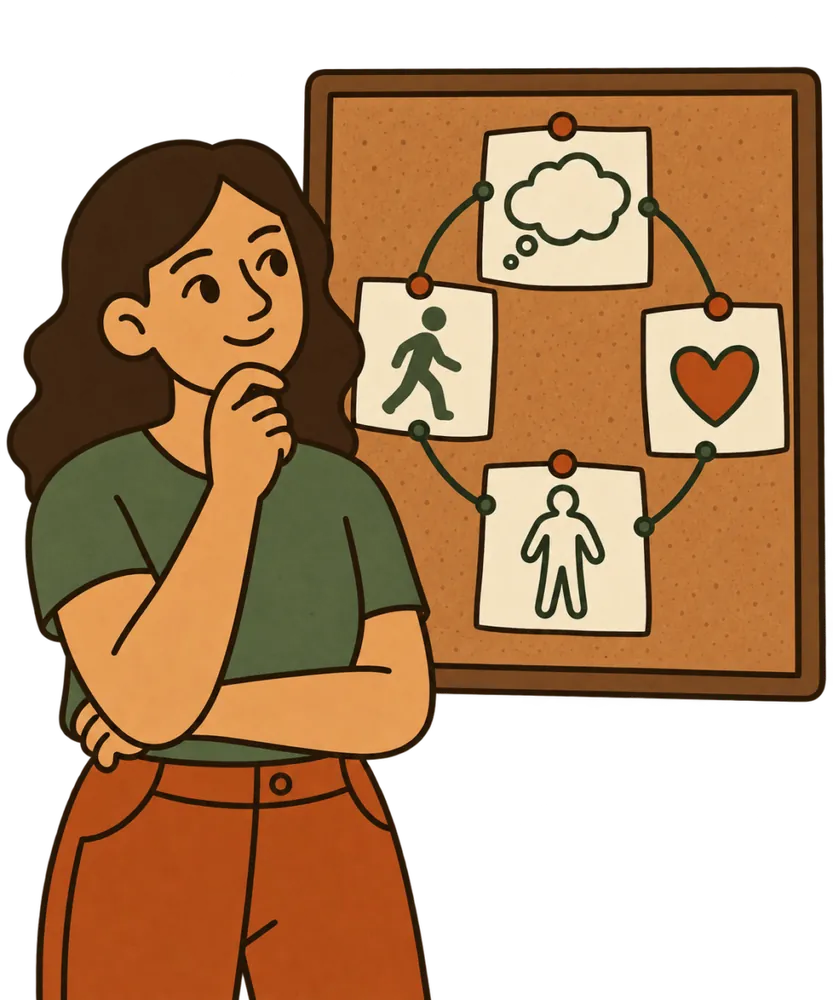
We map out how one anxious thought connects to what you feel, what your body does, and what you end up doing next.
If your brain swears speaking up in a meeting will go badly, we can check that against what actually happens.
Other times the thought itself is not the most important part.
The bigger issue may be what anxiety has convinced you that you need to do next.
When avoidance is what keeps anxiety fed, we work on going toward things in small steps, so your brain gets new evidence instead of the same old story.
And if asking “are you sure?” calms you down for ten minutes before you need to ask again, we look at what keeps that going.
The goal is not perfect certainty.
Humans do not get much of that.
The aim is to let anxiety come along for the ride without letting it pick where you go.
How therapy can help
What the work looks like
There is no prize for using every coping skill in the book.
We figure out what actually helps you.
Depending on you, sessions might cover
- Mapping out your own version of the anxiety loop
- Spotting triggers and the first signs it's ramping up
- Catching worst-case predictions as they happen
- Avoiding less, step by step
- Getting used to not knowing for sure
- Grounding and calming skills for when it spikes
- Handling panic symptoms when they show up
- Cutting back on checking and reassurance-seeking
- Small experiments that test what anxiety predicts
- Skills you practice at home between sessions
- Telling the difference between solving a problem and chewing on it for the fourth hour
Therapy without the waiting room
If getting out the door is the hardest part of your week, video sessions remove that step. You can join from your own couch, or any room where you can close the door, and spend your energy on the session instead of the parking lot.
Before you book
Common questions
Questions people tend to ask before starting anxiety work. The FAQ page has more.
Will you make me face my biggest fear?
No.
Not on day one, and not without your say. If exposure work fits, we plan it together once we understand what anxiety is doing in your life, and we start with something that feels doable.
The goal is progress you can handle.
How is anxiety different from OCD?
They overlap, but OCD runs on its own cycle. Intrusive thoughts, images, urges, or doubts show up, and then come compulsions, physical ones like checking or mental ones like reviewing, done to bring the distress down or to feel certain.
Because treatment for OCD looks different, it helps to know which one you're dealing with.
Read more about OCD and intrusive thoughts.
Can online therapy work for anxiety?
Yes. Many well-researched therapies can be done well over video. Doing sessions from home can also make it easier to keep coming, especially on weeks when leaving the house feels like too much.
Details on online therapy in Florida.
Ready when you are
Book a time on my scheduling page. It works the same way whether you use insurance or pay privately, and you can add your insurance when you book. Questions first? Call 754.400.0824 or send me a message. The Insurance page has the plans I accept.
What it costs: your plan’s copay or coinsurance if I am in network, 20% after the deductible with Original Medicare, or the private pay rate. See costs
For the curious
Want to nerd out on the research?
None of this is required reading. If you like knowing where the ideas behind anxiety treatment come from, these are solid places to start.
- Anxiety Disorders (opens in a new tab)National Institute of Mental Health
- Panic Disorder: When Fear Overwhelms (opens in a new tab)National Institute of Mental Health
- What Is Cognitive Behavioral Therapy? (opens in a new tab)American Psychological Association
This website is not for emergencies. If you are in crisis, call or text 988, or call 911.