Telehealth therapy · Anywhere in Florida
Disability and Chronic Illness
Disability is not automatically a tragedy. The systems around it can still be exhausting.
- Florida LCSW, license SW27230
- Secure video sessions
- In network through Headway
Start here
Both can be true
I have cerebral palsy.
That does not mean my experience of disability is identical to yours.
It does mean you probably will not have to spend the first twenty minutes of therapy explaining that accessibility problems are real.
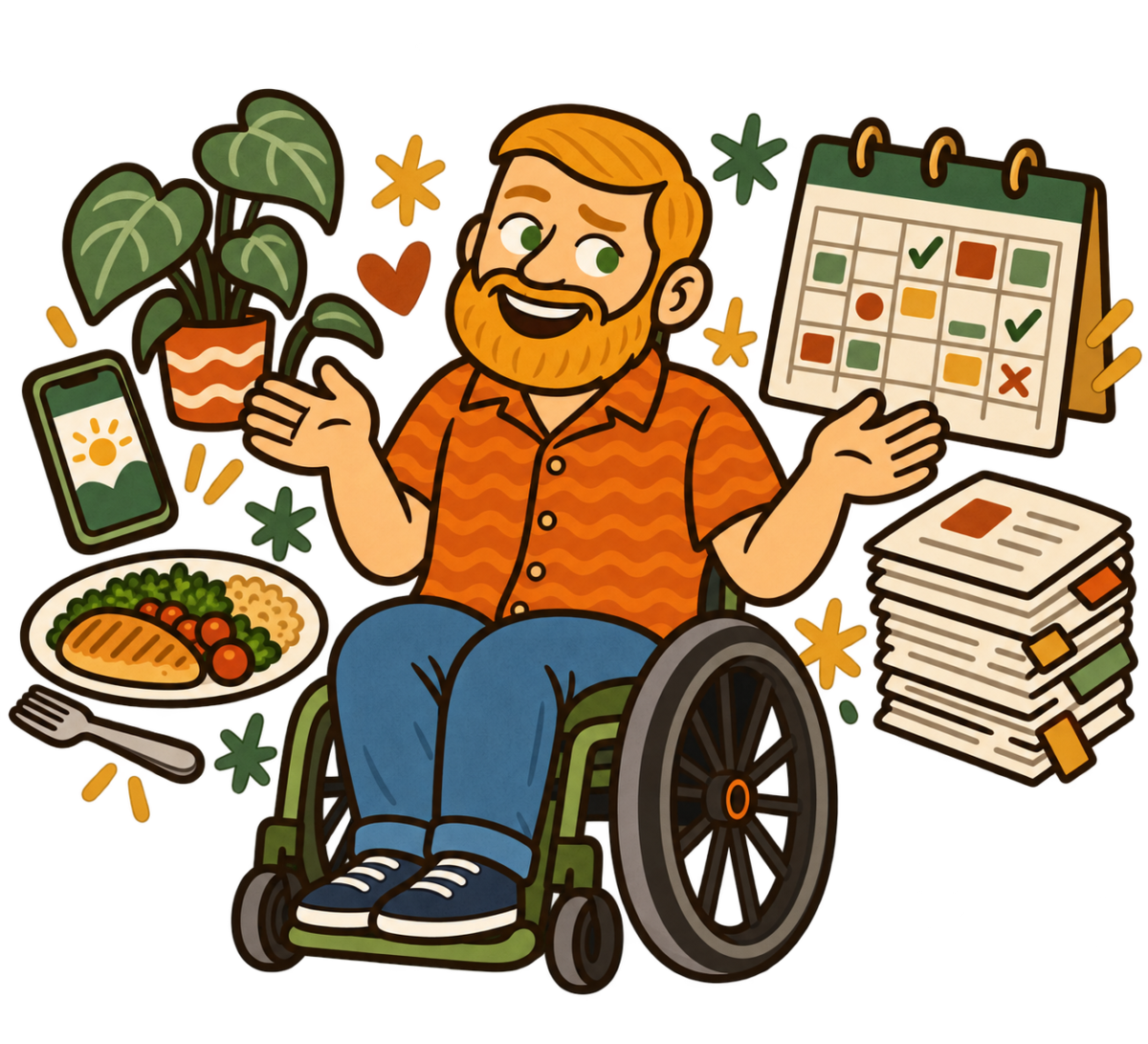
Living with disability or chronic illness can involve a strange mixture of very ordinary life and completely ridiculous logistics.
You can be dealing with relationships, work stress, anxiety, grief, dating, family, money, and figuring out what to eat for dinner like everyone else.
At the same time, you may be thinking about transportation, insurance, doctors, accessibility, equipment, pain, fatigue, benefits, caregiving, or whether the place you are supposed to go has a bathroom you can actually use.
Both can be true.
How I approach it
Therapy without assuming your body is the problem
Disability-affirming therapy does not require treating disability itself as something that needs to be emotionally “overcome.”
Sometimes disability causes genuine loss, pain, limitation, grief, or fear.
We can talk about that without pretending those experiences are inspirational.
We can also talk about discrimination, inaccessible environments, dependence on unreliable systems, other people’s assumptions, and the enormous amount of administrative work disability can create.
The goal is not forced positivity.
The goal is helping you live as well as possible inside the reality you actually have.
Independence is not all or nothing
Disabled people are often given an odd definition of independence where success supposedly means never needing anybody.
That is not how human beings work.
A more useful question may be:
- Where do you want more control?
- Where would support make life easier?
- What kind of help feels supportive rather than intrusive?
- What choices matter most to you?
Interdependence is not failure.
What it can look like
Medical systems can leave a mark
Repeated medical treatment can create its own kind of stress.
Therapy cannot make the healthcare system behave.
It can give you somewhere to process what navigating that system has done to you.
You may have experienced
- Not being believed
- Symptoms being dismissed
- Every complaint being blamed on an existing disability
- Painful procedures
- Loss of privacy
- Long hospitalizations
- Caregiver dependence
- Changes in function
- Fear of another medical problem
- Insurance battles
- Providers talking to someone beside you instead of talking to you
Disability, relationships, and identity
Disability can affect relationships in complicated ways.
Partners sometimes become caregivers.
Parents may struggle with allowing autonomy.
Friends may not understand why plans are harder.
Dating can involve deciding when and how to talk about disability.
Work can involve accommodations, disclosure, inaccessible expectations, or feeling like you have to work twice as hard to be considered equally capable.
Therapy gives us somewhere to talk about these things without automatically treating disability as the explanation for every feeling you have.

If a change in health or independence is recent, life transitions may be useful reading too. And when anxiety or depression are part of it, we can work on those together.
Before you book
Common questions
A few things people often ask. There are more answers on the FAQ page.
No.
People use different language for themselves, and chronic health conditions vary enormously.
No.
My experience includes physical disability, developmental disability, neurodivergence, chronic health concerns, and the broader systems that people encounter while trying to get support.
No.
Shared experience can reduce some of the explaining, but your life is still your life.
I am not going to assume that my experience tells me yours.

Ready when you are
You can book a time on my Headway profile, where you can also check your insurance coverage. Questions first? Call 754.400.0824 or send me a message. The Insurance page has the plans I accept.
Want to nerd out on the research?
You absolutely do not need to read research papers to come to therapy. But if you are the kind of person who wants to know where this stuff comes from, here are a few good places to start.
- Chronic Illness and Mental Health National Institute of Mental Health
- Disability and Health Centers for Disease Control and Prevention
This website is not for emergencies. If you are in crisis, call or text 988, or call 911.