
Telehealth therapy · Anywhere in Florida
Therapy for Depression
For when everything feels heavier than it should
- Florida LCSW, license SW27230
- Secure video sessions
- In network with Aetna, Cigna, Medicare, and more
Start here
Depression can make everything smaller
Depression does not always look like crying.
Sometimes it looks like sleeping twelve hours and still feeling tired.
Sometimes it is irritability.
Sometimes everything feels flat.
A lot of people with depression still go to work, answer the emails, and pick up the kids. They just can't remember the last time any of it felt like it mattered.
It gets into your sleep and your appetite. It drains energy and focus, makes texting a friend back feel like a chore, and takes the fun out of things you used to look forward to.
It can also shrink your world.
You stop answering texts because responding feels like work.
You stop doing things because they do not sound enjoyable.
Dishes pile up.
Then you feel worse about the fact that tasks are piling up.
Then it points at the dishes and the unread texts and calls that proof you're failing.

What it can look like
More than feeling sad
Sadness is only part of it. For a lot of people depression feels like a battery that never fully charges. Getting out of bed takes everything, the things you used to love feel flat, and you keep wondering why you can't just snap out of it. That isn't laziness, and it isn't a character flaw. Depression is common, and it is treatable.
- Feeling flat, empty, or numb most days of the week
- Hobbies and plans that used to sound fun now sound like work
- Sleeping way too much, or hardly at all
- Reading the same paragraph three times, or moving like you're underwater
- Appetite way up or way down
- Letting calls from friends and family go to voicemail
- A mean inner voice, guilt, or a sense nothing will change
Why it sticks around
Waiting to feel ready
Depression likes to tell you that you'll start once you feel like it. So you wait, and the feeling never shows up.
In treatment we often flip that order around.
We pick one small thing that fits the energy you have right now, like a ten-minute walk or answering one email.
Not imaginary ideal you.
You, today.
Behavior can influence mood just as mood influences behavior.
That does not mean “go for a walk and your depression will disappear.”
From there we add pieces back a little at a time, like a regular bedtime, lunch with a friend, a walk around the block, or ten minutes with the guitar that's been collecting dust.
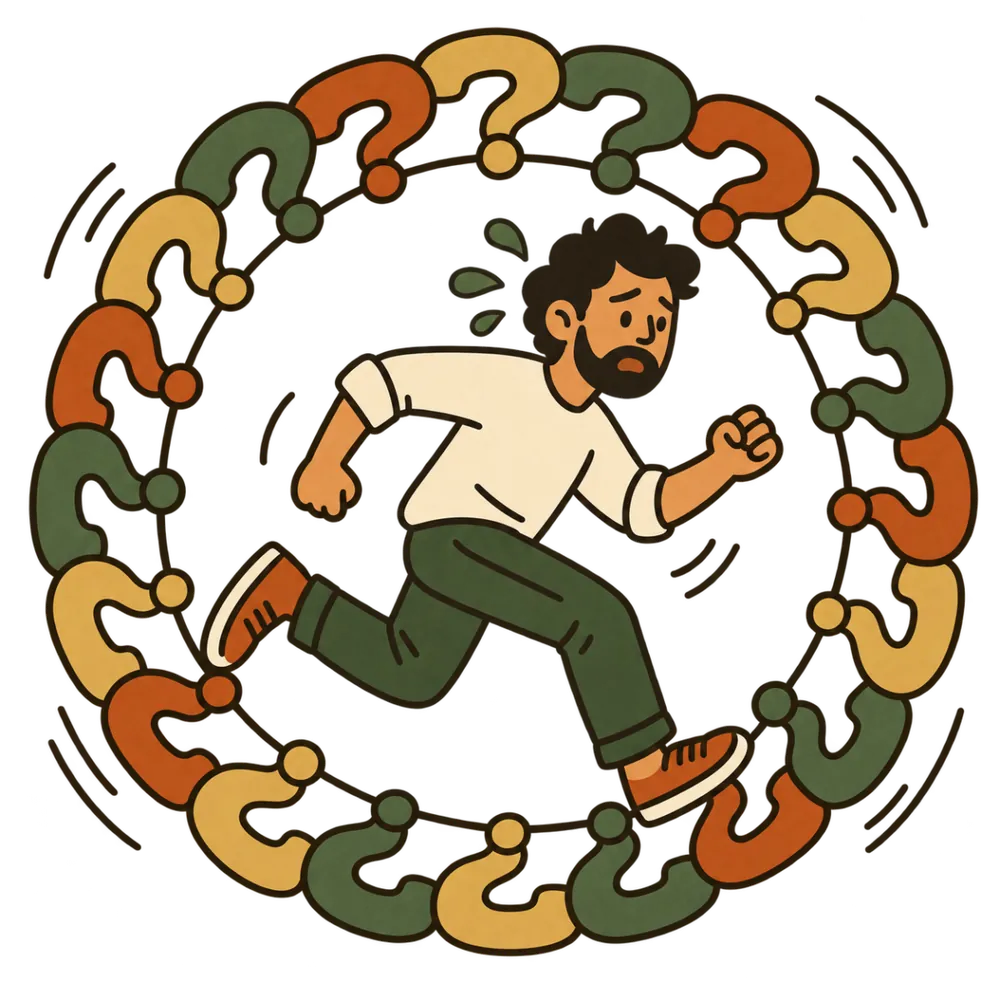
Rumination feels productive until it isn't
There's a difference between thinking a problem through and just circling it over and over.
- Why am I like this?
- Why did I say that?
- What's wrong with me?
- What if it's always like this?
You can replay one conversation for hours and end up exactly where you started, only more tired.
In therapy you practice catching the moment thinking turns into looping. Then we look at what would help instead. That might be solving the actual problem, accepting the part you can't change, or getting up and doing something with your hands.
How therapy can help
What the work looks like
The pace follows your energy. In the first weeks that might just mean a steady wake-up time and one errand a day, like the pharmacy pickup you keep putting off. Once there's a little more fuel in the tank, we look at the thoughts and habits that keep depression running and practice answering them differently.
When a loss, burnout, or a big life change is feeding the low mood, read the life transitions page too. If the depression comes with bipolar disorder or other severe mood symptoms, the serious mental illness page is the better fit.
Things we might work on
- Figuring out what changed, and when
- Tracking how sleep, thoughts, habits, and people affect your mood
- Cutting big, frozen problems into pieces you can start on
- Behavioral activation
- Talking back to the inner critic
- Checking hopeless predictions against the facts
- Rebuilding a daily routine
- Getting back to the people and hobbies you've dropped
- Working through grief, loss, or big changes
- Noticing early warning signs before a low stretch gets deep
- Coordinating with your psychiatric provider when it makes sense
If you are thinking about suicide
You are not alone, and help is available right now. Call or text 988 to reach the 988 Suicide and Crisis Lifeline, any time, day or night. If you are in immediate danger, call 911 or go to the nearest emergency room. This website and my phone line are not monitored around the clock.
Before you book
Common questions
These come up a lot. You'll find more on the FAQ page.
What if I don't have the energy for therapy homework?
Then that's what we talk about.
The last thing you need is another assignment to feel bad about skipping.
We look at what got in the way, then shrink the task, swap it for something else, or make it fit your actual week.
Can I do therapy while I'm on antidepressants?
Absolutely.
Yes. Therapy and medication can work side by side.
Lots of people do both, and I have plenty of experience working with psychiatrists and psychiatric nurse practitioners.
I don't prescribe medication.
What if I can't point to a reason I'm depressed?
You don't have to show up with a reason.
Sorting that out is part of what we do together.
Ready when you are
Book a time on my scheduling page. It works the same way whether you use insurance or pay privately, and you can add your insurance when you book. Questions first? Call 754.400.0824 or send me a message. The Insurance page has the plans I accept.
What it costs: your plan’s copay or coinsurance if I am in network, 20% after the deductible with Original Medicare, or the private pay rate. See costs
For the curious
Curious what the research says?
None of this is required reading. If you like checking sources, these are solid places to see what's known about depression and how it gets treated.
- Depression (opens in a new tab)National Institute of Mental Health
- Clinical Practice Guideline for the Treatment of Depression (opens in a new tab)American Psychological Association
- 988 Suicide and Crisis Lifeline (opens in a new tab)988lifeline.org
This website is not for emergencies. If you are in crisis, call or text 988, or call 911.