Telehealth therapy · Anywhere in Florida
Therapy for Anxiety
For when your mind will not stop running
- Florida LCSW, license SW27230
- Secure video sessions
- In network through Headway
Start here
Anxiety makes sense. That does not mean it has to run things.
Anxiety is your brain trying to keep you safe.
Unfortunately, brains are not always particularly good at deciding what deserves the emergency siren.
Anxiety can show up as constant worrying, physical tension, panic attacks, racing thoughts, irritability, trouble sleeping, avoidance, checking, reassurance seeking, or feeling like you need to prepare for every possible outcome before you can relax.
Sometimes the thing you are afraid of is obvious. Sometimes you just have the unsettling feeling that something is wrong and cannot seem to turn it off.
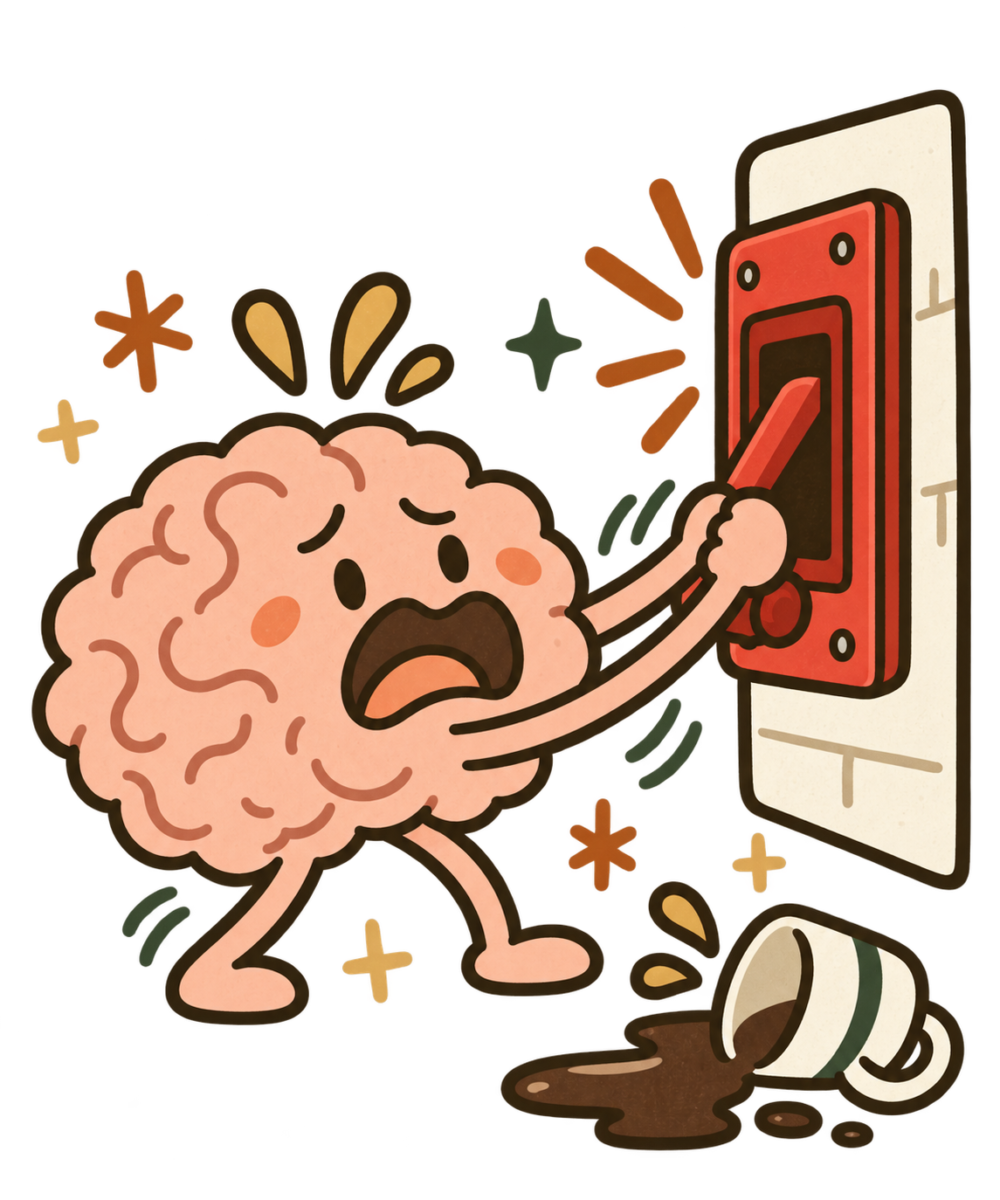
Therapy is not about convincing you that everything is fine. Sometimes everything is not fine. The goal is to get better at separating an actual problem that needs your attention from an alarm system that has become a little too enthusiastic.
What it can look like
Sound familiar?
Anxiety is more than worrying too much. It can be a racing heart before a phone call, a stomach that will not settle, lying awake replaying a conversation, or skipping things you used to enjoy because staying home feels easier. Panic attacks can come out of nowhere and feel like something is seriously wrong.
- Constant worry or a loop of what-ifs
- Intrusive thoughts, or feeling pulled to check, repeat, or seek reassurance
- Panic attacks: racing heart, shortness of breath, feeling dizzy or out of control
- Avoiding places, people, or tasks
- Trouble sleeping or relaxing
- Tense muscles, headaches, or stomach trouble
- Feeling on edge or irritable
Why it sticks around
Why anxiety can get stuck
Anxiety often creates a pretty convincing feedback loop.
Something feels threatening.
Your mind predicts what could go wrong.
Your body reacts as though the danger is already happening.
Then you understandably do something to make the feeling stop.
You might avoid the situation, leave early, check something repeatedly, ask someone for reassurance, search online, replay the conversation for the fiftieth time, or try to make absolutely certain that the bad thing will not happen.
And sometimes that works.
For a few minutes.
The problem is that your brain may learn that escaping, checking, or getting reassurance was what kept you safe. The next time the trigger appears, it sends the alarm again.
Part of anxiety treatment is learning how to interrupt that cycle without asking you to pretend that uncertainty does not exist.
How I approach it
CBT is more than “thinking positively”
I use Cognitive Behavioral Therapy frequently in anxiety treatment, but CBT is not me sitting across from you and arguing that your thoughts are irrational.
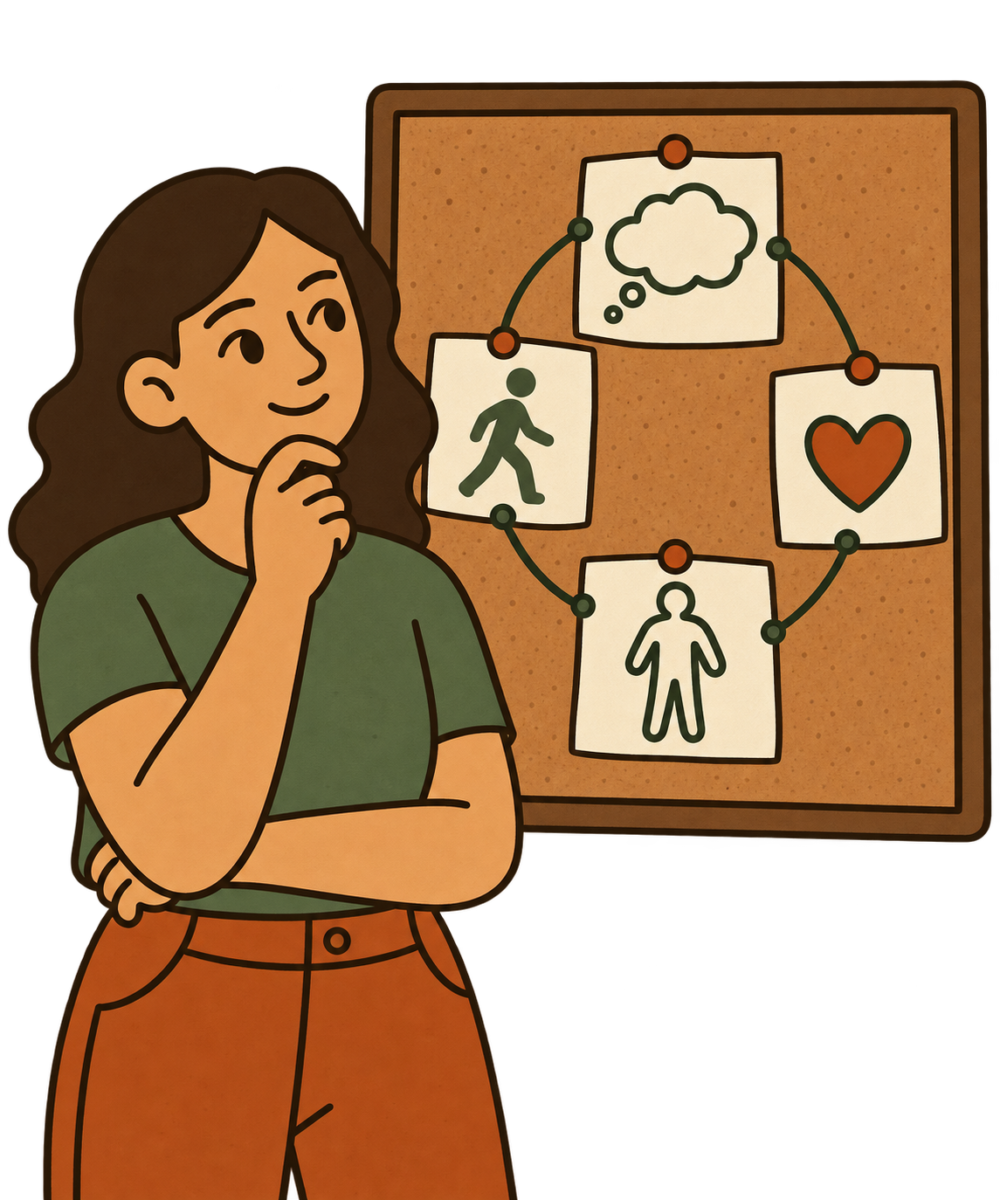
We look at the relationship between thoughts, feelings, physical reactions, and behavior.
Sometimes that means examining whether a prediction is supported by what is actually happening.
Other times the thought itself is not the most important part.
The bigger issue may be what anxiety has convinced you that you need to do next.
If avoiding every uncomfortable situation gives anxiety more power, we can work on approaching things differently and giving your brain new information.
If reassurance gives you relief for ten minutes and then you need it again, we can look at what keeps that cycle moving.
The goal is not perfect certainty.
Humans do not get much of that.
The goal is increasing your ability to handle uncertainty without letting anxiety make every decision for you.
How therapy can help
What we might actually work on
There is no prize for using every coping skill in the book.
We figure out what actually helps you.
Therapy for anxiety may include
- Understanding your personal anxiety cycle
- Identifying triggers and early warning signs
- Recognizing catastrophic predictions
- Reducing avoidance
- Building tolerance for uncertainty
- Learning grounding and regulation skills
- Working with panic symptoms
- Looking at reassurance and checking behaviors
- Behavioral experiments that test anxious predictions
- Developing coping strategies you can actually use outside therapy
- Learning when problem solving is useful and when it has quietly turned into rumination
Why telehealth can help
If leaving the house or sitting in a waiting room is part of what makes anxiety hard, starting therapy from a place where you already feel safe can make that first step a lot easier.
Before you book
Common questions
A few things people often ask. There are more answers on the FAQ page.
No.
Exposure-based work, when appropriate, is planned and collaborative. We start by understanding what anxiety is doing and decide together what makes sense to work on.
The goal is not to overwhelm you.
There can be overlap, but OCD involves obsessions and compulsions that create their own particular cycle. Someone with OCD may experience intrusive thoughts, images, urges, or doubts and then perform mental or physical compulsions to reduce distress or gain certainty.
Because treatment can look different, OCD deserves more than being lumped under general anxiety.
More on OCD and intrusive thoughts.
Yes. Many evidence-based psychotherapies can be delivered effectively through telehealth. For some people, being in their own environment also makes therapy more accessible and easier to fit consistently into daily life.
More on online therapy in Florida.

Ready when you are
You can book a time on my Headway profile, where you can also check your insurance coverage. Questions first? Call 754.400.0824 or send me a message. The Insurance page has the plans I accept.
Want to nerd out on the research?
You absolutely do not need to read research papers to come to therapy. But if you are the kind of person who wants to know where this stuff comes from, here are a few good places to start.
- Anxiety Disorders National Institute of Mental Health
- Panic Disorder: When Fear Overwhelms National Institute of Mental Health
- What Is Cognitive Behavioral Therapy? American Psychological Association
This website is not for emergencies. If you are in crisis, call or text 988, or call 911.