
My Experience
Here is a little more about what I know.

Why I do this...
The Heart of My Work
Mental health is not only therapy. It’s connection, education, access, and compassion. I work with adults navigating anxiety, depression, trauma, and major life changes. Every environment has strengthened my ability to connect, coordinate, and help people move toward stability. My goal is to make mental wellness approachable, practical, and human.
Clinical & Community Experience
I’ve had the privilege to work across both community and clinical settings where flexibility, teamwork, and consistency are vital. Each role has deepened my commitment to evidence-based, person-centered care.
Where I've done the work
Outpatient psychiatry practices. At Elevate Psychiatry and My Psychiatrist I am the psychotherapist on a multidisciplinary team. I provide individual therapy, coordinate care with the psychiatrists and nurse practitioners who manage medication, and keep documentation to Medicaid, Medicare, and commercial insurance standards. I am not a psychiatrist and I do not prescribe.
Community mental health. At Henderson Behavioral Health I worked in the co-occurring disorders outpatient program using the Role Recovery model: individual therapy, crisis intervention and safety planning, and trauma-informed relapse-prevention groups I designed for clients at different stages of readiness.
Hospital. At Broward Health I delivered trauma-informed care and discharge planning so people leaving the hospital had somewhere to land.
Community and disability services. At the FAU Memory and Wellness Center, HabCenter, and Joshua’s Path I ran reminiscence groups for older adults, individualized plans for adults with developmental disabilities, and job-readiness coaching for neurodivergent adults.
Role by role
Provide individual psychotherapy to adults with anxiety, depression, OCD, trauma, and serious mental illness as the therapist on a multidisciplinary outpatient team. Use CBT, DBT, ERP-informed, and solution-focused interventions, and coordinate care with the psychiatrists and nurse practitioners who manage medication. Maintain documentation to ethical and insurance standards and deliver gender-affirming, culturally responsive care.
- Carry a caseload of 60+ adult clients presenting with anxiety, depression, PTSD, OCD, and co-occurring substance use disorders.
- Apply CBT, DBT, ERP, and motivational interviewing in individual telehealth therapy, adapting modalities to each client’s needs and goals.
- Conduct biopsychosocial assessments and develop individualized treatment plans, including diagnostic formulation and progress monitoring.
- Lead the development of a comprehensive agency resource directory, expanding client access to housing, legal, and behavioral health services.
- Coordinate care with psychiatrists, primary care providers, and community organizations across complex systems of support.
- Practice culturally responsive, gender-affirming, and trauma-informed care that reduces barriers to engagement for underserved populations.
- Maintain timely clinical documentation aligned with Medicaid, Medicare, and commercial insurance standards.
- Manage diverse client caseload with tailored DBT, CBT, and solution-focused interventions for mental health improvement.
- Coordinate with healthcare teams to align treatment with client needs and best practices.
- Ensure timely, accurate documentation meeting ethical and insurance standards.
- Deliver gender-affirming, culturally sensitive care, fostering supportive environments.
- Manage a caseload of 30 clients, delivering client-centered care through personalized therapeutic approaches using CBT, DBT, and motivational interviewing.
- Collaborate with multidisciplinary teams, including psychiatrists and case managers, to develop and implement individualized treatment plans.
- Provide crisis intervention and safety planning to clients experiencing acute mental health episodes, ensuring their safety and continuity of care.
- Lead trauma-informed substance abuse recovery groups, developing tailored curricula aligned with clients’ readiness for change.
- Input timely documentation into NetSmart MyAvatar.
- Awarded 2024 Henderson Behavioral Health North Employee of the Year for outstanding clinical contributions.
- Delivered therapeutic services to clients with a wide range of mental health and substance use challenges, emphasizing trauma-informed care.
- Facilitated discharge planning for clients transitioning to outpatient services by coordinating with healthcare providers and community organizations.
- Maintained accurate and timely documentation in the Cerner Millennium EHR system, ensuring adherence to regulatory requirements.
- Coached neurodiverse adults in life and employment skills using solution-focused techniques, empowering clients toward greater independence.
- Organized interactive workshops on job readiness and practical skills development, fostering self-confidence and workplace readiness.
- Supported cognitive and emotional well-being in senior clients by facilitating engaging group activities and reminiscence therapy.
- Collaborated with healthcare professionals to enhance patient care plans, addressing evolving participant needs through a person-centered approach.
- Facilitated group and individual services for adults with developmental disabilities, employing trauma-informed care principles.
- Led virtual engagement sessions for up to 30 clients during pandemic restrictions, promoting social connection and mental stimulation.
- Developed and implemented individualized care plans for clients with developmental disorders, ensuring personalized support.
Education and Training
I hold both a Bachelor’s and a Master’s degree in Social Work from Florida Atlantic University. My coursework emphasized systems theory, trauma-informed care, and cultural humility. That foundation prepared me to provide ethical, adaptable care across diverse settings.
Florida Licensed Clinical Social Worker · License No. SW27230
Core Areas of Study
- Psychopathology in Clinical Social Work Practice
- Cognitive and Behavioral Interventions
- Trauma-Informed and Strengths-Based Practice
- Cultural Humility and Ethics
- Clinical Assessment and Facilitation
- Human Behavior in the Social Environment
- Family Systems and Advanced Practice with Adults, Children, and Elders
- Mindfulness and Social Work Practice
- Intervention in the Field of Addiction
- Loss and Grief Across the Lifespan
Modalities I use frequently
My approach blends structure and flexibility, using evidence-based strategies that make mental health concepts accessible and practical.
Cognitive Behavioral Therapy (CBT)
Helps identify and reshape unhelpful thought patterns.
Dialectical Behavior Therapy (DBT)
Builds emotional regulation, distress tolerance, and mindfulness skills.
Motivational Interviewing
Encourages change through curiosity, collaboration, and respect.
Solution-Focused Techniques
Builds on strengths and what already works.
Psychoeducation
Makes clinical concepts simple, relevant, and usable in daily life.
Exposure and Response Prevention (ERP)
Faces fears in planned, manageable steps so intrusive thoughts lose their grip.
Trauma-Informed Care
Safety, choice, and trust come first, in every setting and every session.
Mindfulness and Grounding Skills
Practical ways to come back to the present when stress or emotion runs high.
Group Facilitation
Skills-based, recovery, and relapse-prevention groups with curricula built for where people actually are.
James Roberts, LCSW, is licensed by the Florida Board of Clinical Social Work, Marriage & Family Therapy and Mental Health Counseling (SW27230).
Real People
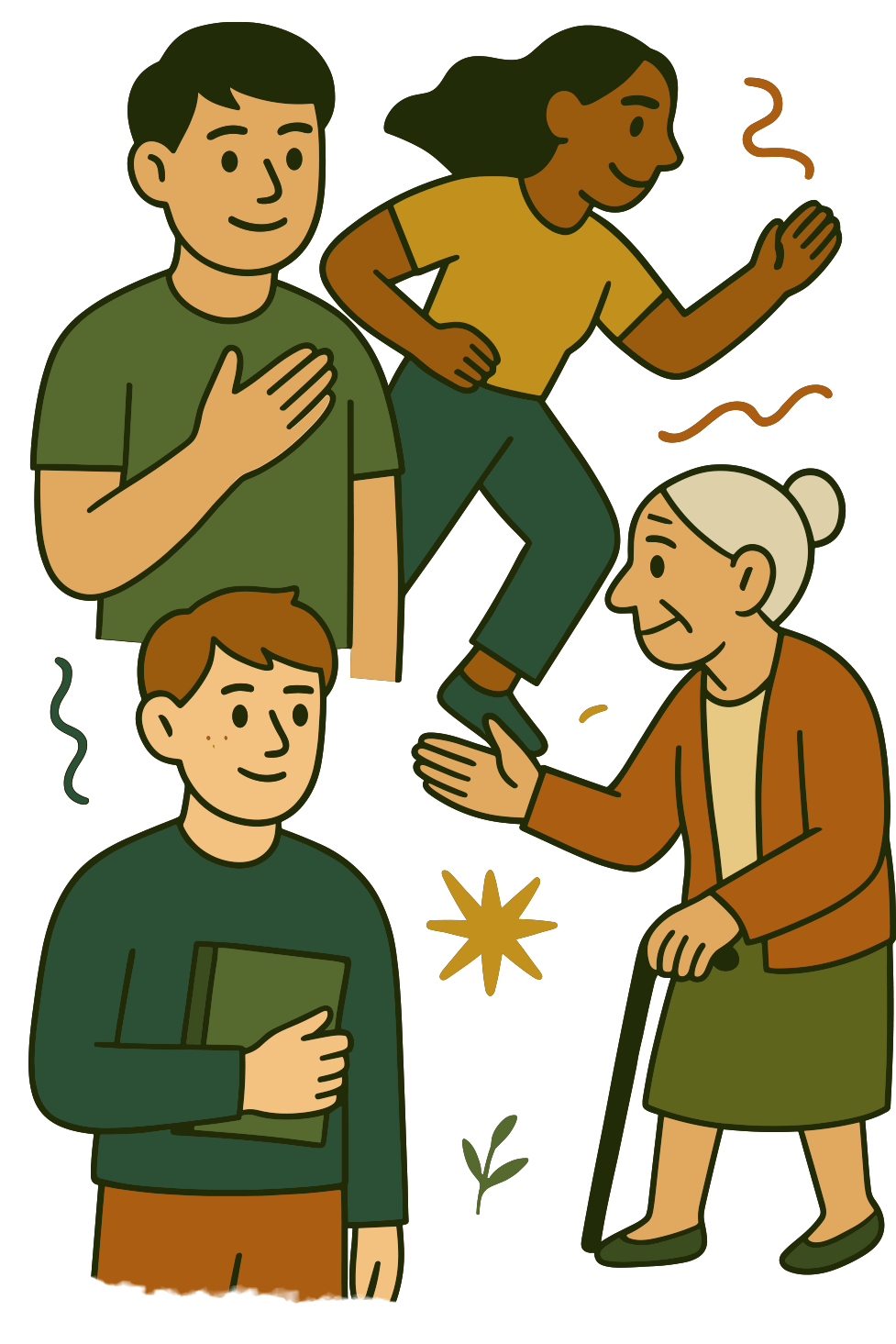
Neurodiverse individuals developing coping, social, and communication skills
Older adults facing memory changes, loss, and late-life transitions


Real Challenges
Adults and young adults managing anxiety, depression, trauma and personality disorders
Adults living with schizophrenia and other serious and persistent mental illness
People in recovery from substance use, including co-occurring conditions
Genuine Care
Individuals exploring identity, inclusion, and self-acceptance
People living with physical disability, chronic illness, or chronic stress